Agentic frameworks reshape enterprise AI strategy
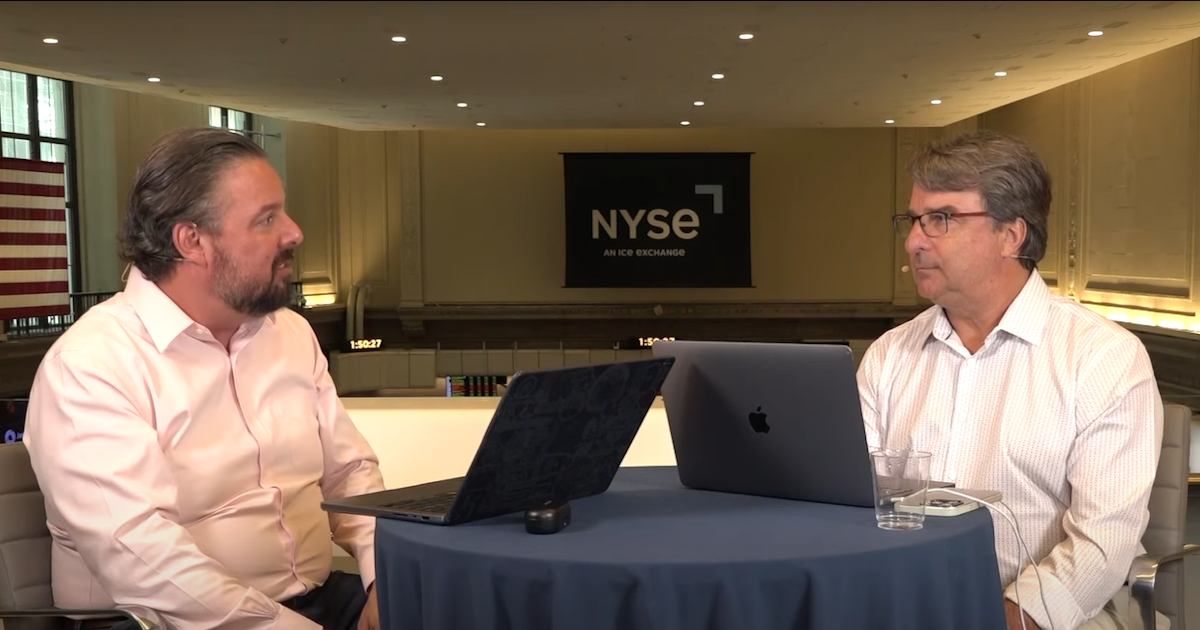
Enterprises adopting AI at scale face a familiar challenge: Aligning innovation with operational efficiency. This blog post, "8 Ways Agentic Frameworks Are Redefining Cloud AI Strategy," explores how agentic frameworks on AWS are reshaping the way businesses design, automate, and scale AI-driven cloud environments. Read the blog to gain fresh insights on cloud optimization.
What are agentic frameworks in enterprise AI?
Agentic frameworks are an approach to AI where multiple AI “agents” work together across data, tools and cloud infrastructure, rather than relying on a single, isolated model or application.
According to analysis from theCUBE Research and conversations with leaders from AWS, Nutanix, Intel and others, agentic frameworks are reshaping enterprise AI in a few key ways:
- From isolated tools to multi-agent ecosystems: Instead of one-off AI tools, companies are moving to composable systems where agents can talk to each other using protocols such as MCP and A2A.
- Data, agents and infrastructure are orchestrated together: AI success now depends on how well organizations orchestrate data, metadata, agents and cloud resources across platforms.
- Open protocols and catalogs matter: There’s a growing consensus that embracing open protocols, metadata catalogs and rapid migration strategies is becoming a core part of AI strategy, not just a backend concern.
In practice, this means enterprises are reimagining their AI stacks around:
- Cloud-native services such as AWS SageMaker and Amazon Bedrock
- Agent orchestration platforms like AWS Kiro and AgentCore
- Multi-agent workflows that can be tuned for cost, performance and compliance
For technology and business leaders, agentic frameworks are less about a single product and more about a design pattern for building scalable, interoperable AI systems across the cloud ecosystem.
Why are metadata catalogs and control planes so important now?
In an agentic AI world, metadata catalogs are emerging as the control plane that keeps everything coordinated. They provide a centralized way to manage tools, agents and data across increasingly complex stacks.
Industry analysis from theCUBE highlights several trends:
- Catalogs as the AI “traffic controller”: Metadata catalogs help route the right data to the right agent at the right time, and track how agents interact with data and each other.
- Cloud platforms are moving this way: Updates to AWS SageMaker and Amazon Bedrock reflect this shift toward catalog- and control-plane-centric designs.
- Global system integrators are pushing adoption: Firms such as Deloitte and Accenture are helping enterprises adopt these patterns as part of broader AI and cloud programs.
For organizations with heavy legacy infrastructure, this has clear implications:
- Staying on static, siloed systems makes it harder to support agent-to-agent protocols and advanced techniques such as vector tiering.
- Modernizing toward a catalog-driven control plane becomes a prerequisite for scalable, multi-agent AI.
Enterprises that treat metadata catalogs and control planes as strategic assets, rather than back-office utilities, are better positioned to manage AI at scale and adapt as new models and agents come online.
How do agentic frameworks impact migration, workflows, and data use?
Agentic frameworks are not just a technical pattern; they are changing how enterprises migrate to the cloud, run AI in production, and work with data.
1. Cloud migration becomes faster and more value-focused
- Leaders from Nutanix and AWS describe how AI-driven, agentic approaches are turning migration from a long, painful project into a more compressed, secure, value-driven process.
- AI-infused toolchains and cross-platform portability allow partners to deliver more tailored solutions, especially in regulated sectors such as financial services.
2. Enterprise workflows and economics are rethought
- Companies are using agentic workflows to pursue real productivity gains, but execution requires more than just plugging in a model.
- Experts from Intel emphasize the need for prompt–context–model frameworks, cost-aware compute strategies and API monetization to keep AI scalable and sustainable.
- Platforms like Karini AI bring these workflows into business reality with no-code/low-code tools deployed directly in customer VPCs, enabling nontechnical teams in law, HR and engineering to build private AI solutions.
3. Data bottlenecks are addressed with synthetic data
- Many enterprises struggle to unlock customer data for AI because of regulatory, privacy and architectural constraints.
- Vendors such as DataMasque generate high-fidelity, synthetically identical datasets inside the client’s secure environment, enabling safe testing and training of AI agents without exposing real customer data.
Taken together, these shifts show how agentic frameworks help organizations reimagine not just their AI architecture, but also how they migrate, operate and safely leverage data across the cloud.
Agentic frameworks reshape enterprise AI strategy
published by Strategic Endeavor LLC
Strategic Endeavor, LLC, founded in 2013, is an emerging 8(A) and Service-Disabled Veteran Owned Small Business (SDVOSB) that specializes in providing management consulting, technology solutions, and administrative services to the Government and industry. Strategic Endeavor LLC is an approved Microsoft Cloud Provider and provides these services as an indirect seller in partnership with TD SYNNEX
SYNNEX Stellr Cloud Marketplace is a modern end-to-end solutions ecosystem that helps partners deliver more value to their customers. Strategic Endeavor LLC can leverage TD SYNNEX’s large number of state and local government and educational contracts and educational contracts-including NAPO ValuePoint and NCPA and NCPA directly on behalf of the manufacturers. Strategic Endeavor can also leverage TD SYNNEX GSA Schedule 58 and Schedule 70 to sell to the Federal government and its GSA Schedule SIN 511210 Software Publisher
Strategic Endeavor LLC provides the following Microsoft Solution
Microsoft 365
Helping customers build a modern workplace that allows them to work smarter and stay secure.
Office 365
+ migration services
Microsoft 365 + ISVs
+ managed services
Microsoft 365 + Azure Backup
+ DevTest + managed services
Azure practice
Azure migration, from defining a strategy to
migrating and optimizing
Contact: telephone 800-422-0381, Email: srhodes@seresults.com



 Sign in with LinkedIn